How Much Does It Cost to Restore a Luxury Watch?
When considering how much it costs to restore a luxury watch, the brand and model are only the starting point.
Two watches from the same manufacturer may arrive at a workshop in very different conditions. One may show only signs of wear on the case, while another may have already undergone several polishing treatments, have worn components, altered finishes, or issues affecting the movement.
This is why there is no single price that applies to luxury watch restoration.
The estimate depends on the condition of the individual watch, the components involved, the material, previous work carried out, and the type of intervention required. Pendulum Laboratorio states that it assesses each watch individually before determining the most appropriate restoration work.
The guide
Why Is There No Standard Price for Watch Restoration?
The term "restoration" can refer to very different types of work.
An intervention may involve the case and its finishes, an external component, a dial, a bezel, a bracelet, or the movement.
Even when the problem appears similar, the initial condition of the watch can significantly affect the work required.
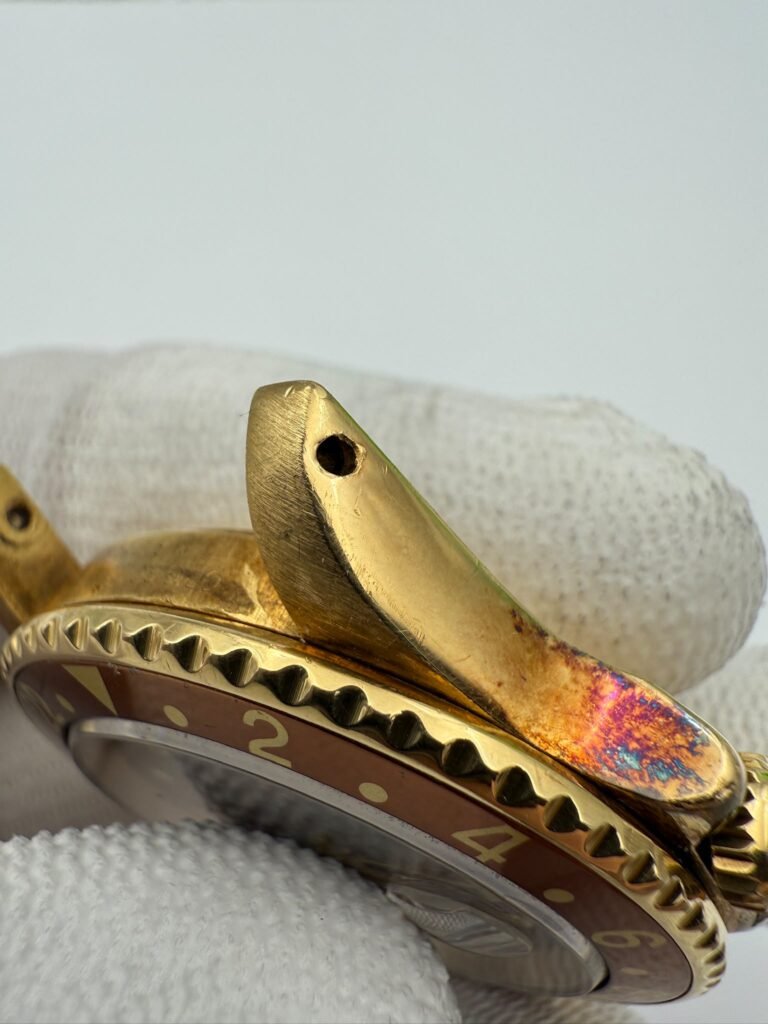
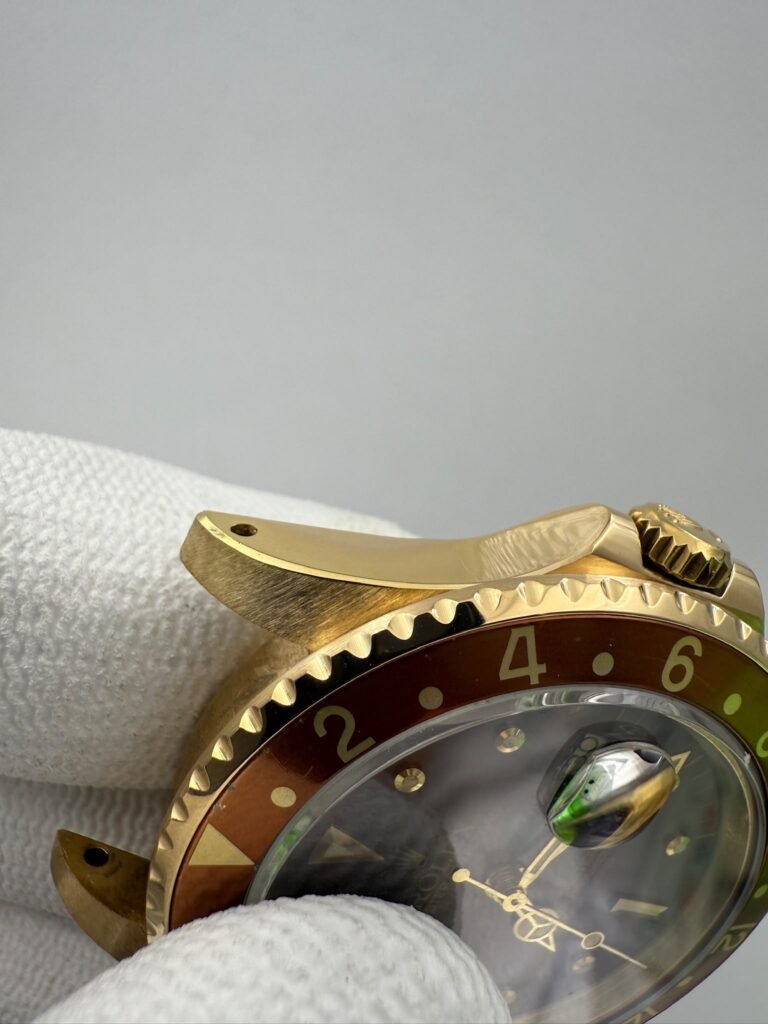
A case with a few superficial scratches is not in the same condition as one that has suffered impacts, deformation, or multiple interventions over the years.
Similarly, a watch requiring aesthetic restoration does not necessarily need a movement service.
The cost should therefore reflect the work actually required, rather than simply the brand, age, or market value of the timepiece.
What Factors Influence the Cost of Watch Restoration?
Several factors can affect a restoration estimate.
The Material
The work required on a component also depends on the material from which it is made.
Stainless steel, gold, platinum, and titanium have different properties and may require different restoration techniques. Pendulum, for example, states that it works on stainless steel, gold, platinum, and titanium components as part of its engraving and bezel restoration services.
However, the material alone is not enough to determine the price.
It must be considered alongside the component's shape, finishes, and overall condition.
The Type of Damage
A scratch, abrasion, dent, or deformation does not necessarily require the same type of restoration work.
The location of the damage can also affect the assessment.
In aesthetic watch restoration, for example, Pendulum considers the depth and position of scratches and impact damage, the remaining case geometry, the condition of the surfaces, and any previous work carried out.
The Condition of the Component
A component may still be in good condition or may have already undergone several interventions.
This is particularly important when working on surfaces that must retain specific shapes, profiles, and finishes.
The estimate must therefore take into account not only the visible defect but also the overall condition of the affected component.
The Complexity of the Restoration Work
A localized intervention may require a very different amount of work compared with a restoration involving multiple surfaces or components.
Even when the problem appears limited to a specific area, it is necessary to establish whether the work can be carried out without altering other characteristics of the watch.
Previous Restoration Work
Previous work can change the starting condition of a watch.
For example, a case that has already undergone several polishing treatments may have different edges and profiles compared with a case that has never been refinished.
The same principle applies to other components.
The pages outlining the services offered by Pendulum explicitly take previous interventions into account as one of the elements to assess before determining how to proceed.
Key factors to consider
Aesthetic Watch Restoration vs. Mechanical Servicing: Why Costs Can Vary
When discussing watch restoration, it is useful to distinguish between cosmetic and mechanical interventions.
Aesthetic watch restoration, may involve the case, surfaces, finishes, and external components.
Mechanical servicing, on the other hand, concerns the movement, winding system, timekeeping accuracy, and internal operation of the watch. The procedure described by Pendulum includes an initial assessment, movement disassembly, cleaning, component inspection, lubrication, and regulation.
Both types of work may be required together, but they are not the same.
Consequently, an estimate for the cosmetic restoration of a watch cannot automatically be considered an estimate for movement servicing.
Before determining the cost, it is therefore essential to understand which problem needs to be addressed.
How Much Does Previous Restoration Work Affect the Cost?
This is one of the factors that can make the assessment of two apparently similar watches very different.
A surface may have been polished, a component may have been replaced, or a dial may have already undergone restoration work.
In the case of dials, Pendulum considers, among other factors, which elements remain original, which areas have been modified, and how much can be restored without further altering the component.
A bezel may also require a different assessment if it shows signs of previous interventions, as the material, finish, and remaining geometry all form part of its initial condition.
This explains why the cost of restoration cannot be determined simply by looking at the most obvious defect.
Can You Determine the Cost of Watch Restoration from Photographs?
Photographs can be extremely useful for an initial assessment.
They make it possible to examine the overall condition of the watch and identify components that appear to require attention.
For an initial assessment, it is useful to photograph:
The front of the watch;
The caseback;
The sides of the case;
The lugs;
The bracelet and clasp;
The damaged areas;
Any engravings;
The dial and its details.
Pendulum identifies detailed photographs as useful material for an initial assessment of various restoration services, including work on cases, bezels, , and bracelets.
However, photographs do not always make it possible to assess what is not visible externally.
For example, the internal condition of a movement may require a specific inspection. The same distinction applies when a photograph does not allow for an accurate assessment of the material, geometry, or previous restoration work.
For this reason, a photographic assessment can provide an initial indication, but it does not necessarily constitute a final quotation.
What Should a Watch Restoration Estimate Include?
A restoration estimate should make it clear which types of work have been considered.
Depending on the type of intervention, it may be useful to distinguish between:
The component involved;
The proposed restoration work;
Any additional work required;
Any components that need replacing;
Aesthetic restoration work;
Mechanical servicing;
Any work entrusted to external specialists;
The overall cost and terms of the service.
Pendulum states that customers are informed of the proposed restoration process at the quotation stage for aesthetic restoration services.
This makes it possible to relate the cost to the work actually being proposed.
A restoration estimate should therefore be considered alongside the description of the work, rather than simply comparing the final price with that offered by another workshop.
Are the Brand and Model Enough to Determine the Restoration Cost?
No.
These details are necessary to identify the timepiece, but they do not describe its condition.
A Rolex, an Omega, a Cartier, or any other luxury watch can have completely different requirements, even when they belong to the same generation or product tier.
The same applies to vintage watches.
Age can be useful information, but it does not, on its own, establish which components are original, what work has been carried out in the past, or which restoration procedures are currently possible.
For this reason, Pendulum assesses each individual watch and the condition of its components before determining the work required.
What Information Should You Send to Pendulum for an Initial Assessment?
To allow for an initial assessment, it is useful to provide as much information as possible without making any changes to the watch beforehand.
The most useful information includes:
Brand and Model
These details help identify the timepiece.
Reference Number
If available, this can help identify the watch's specific configuration.
Photographs
Full-view photographs and close-up images of the areas showing problems are useful.
Description of the Problem
Explain what you would like to restore and any issues you have noticed.
Information About Previous Work
If you know that the watch has already been polished, serviced, or undergone other interventions, it is useful to mention this.
Available Documentation
Invoices, receipts, certificates, or other information about the watch's history can help establish the condition of the timepiece.
For remote bezel assessments, Pendulum specifically requests the brand, model, reference number, material if known, a description of the problem, and both full-view and close-up photographs.
The Cost of Watch Restoration Depends on the Individual Timepiece
There is therefore no standard price for restoring a luxury watch.
The estimate depends on the condition of the individual watch, the materials of the affected components, the type of damage, the complexity of the work, and any previous interventions.
The estimate depends on the condition of the individual watch, the materials of the affected components, the type of damage, the complexity of the work, and any previous interventions.
For this reason, an indicative price found online can only serve as a general reference and cannot establish how much the restoration of a particular watch will cost.
An assessment based on the brand, model, photographs, and a description of the problem makes it possible to start from the actual condition of the timepiece.
How Can You Find Out What Restoration Work Your Watch Needs?
You can send Pendulum Laboratorio the brand, model, and reference number, if available, together with photographs of the watch and a description of the problem.
The images may allow for an initial assessment. When the condition of the watch cannot be determined remotely, a direct examination of the timepiece will be necessary.
Popular Questions
Photographs can provide an initial assessment of the watch’s visible condition. However, they do not always make it possible to determine with certainty which restoration procedures are required or whether a component can be restored. In some cases, a direct examination of the watch is therefore necessary.
Not necessarily. The age of the watch is only one of the factors to consider. Its overall condition, the originality of its components, any previous restoration work, and the type of intervention required can all affect the final estimate.
No. Polishing is one possible cosmetic restoration procedure and must be assessed based on the condition of the case, its geometry, finishes, and any previous work carried out. Not all watches require the same treatment.
Contact
info@pendulumlaboratorio.com
+39 3477670913
Partita IVA 02365780507
 English
 Italian