Vintage Rolex Restoration: What to Consider Before Starting
A vintage Rolex can reveal much about its history through its condition.
A case with well-preserved surfaces, an original dial, a bezel consistent with the production period, or a bracelet showing signs of long-term use can all provide valuable information about the watch and its past.
For this reason, when considering vintage Rolex restoration, the first question should not be how much the appearance can be changed, but which characteristics should be preserved.
An intervention carried out without considering the model, period and condition of each component can alter features that form part of the watch's original configuration.
The evaluation should therefore come before the restoration work.
The guide
A Vintage Rolex Is Not the Same as a More Recent Model
The term “vintage” covers watches produced across different periods, with construction and aesthetic characteristics that can vary considerably.
Two Rolex watches that appear similar may have:
different case shapes;
different lug profiles;
period-specific finishes;
distinctive dial characteristics;
different bezel configurations;
bracelets from different production periods;
components replaced over the years.
The history of the individual watch also needs to be considered.
A vintage Rolex may have undergone several services, polishing, modifications or component replacements during its lifetime.
Before deciding how to proceed, it is therefore useful to reconstruct, as far as possible, the current condition and history of the watch.
What to Look at Before Restoring a Vintage Rolex
An initial assessment should begin with the watch as a whole and then move to its individual components.
The Case
The case is one of the areas most likely to show the effects of use and previous interventions.
Scratches, dents and signs of wear may be accompanied by changes in the surfaces caused by earlier polishing.
Particular attention should be paid to:
lug profiles;
edges;
brushed surfaces;
polished areas;
overall geometry;
evidence of previous work.
Not every case requires the same type of intervention.
In some cases, certain characteristics can be recovered. In others, further work could alter the geometry of the case.
For this reason, Rolex case restoration should begin with an assessment of the existing condition.
Key factors to consider
Rolex Polishing: When Should the Case Be Worked On?
Polishing is one of the processes that can most noticeably alter the appearance of a watch.
With a vintage model, however, polishing does not simply mean removing the marks accumulated through use.
The work should take into account the original geometry of the case and the finishes intended for its different surfaces.
Excessive polishing can alter:
lug shape;
edges;
profiles;
the transition between polished and brushed surfaces;
the proportions of the case.
For this reason, before undertaking Rolex polishing, it is important to assess how much material may already have been removed and which characteristics of the case remain.
In some cases, a limited intervention may be appropriate. In others, preserving the existing condition may be the better option.
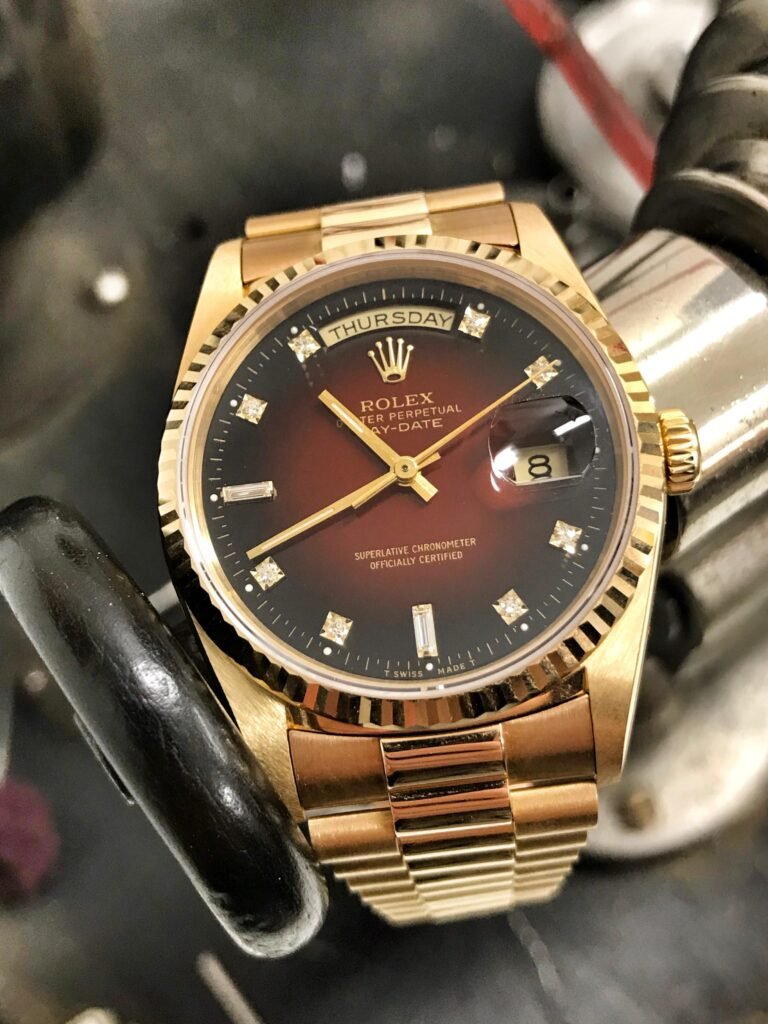
The Dial: Preserve It or Restore It?
The dial can be one of the most delicate components to assess.
Colour, printing, markers, hands and patina can change over the years, both through normal use and exposure to external factors.
On a vintage Rolex, some of these changes may form part of the individual history of the watch.
It is therefore important to distinguish between:
deterioration;
previous modifications;
original characteristics;
age-related changes;
replaced components.
However, dial restoration should be assessed separately from case restoration.
The Bezel and Its Characteristics
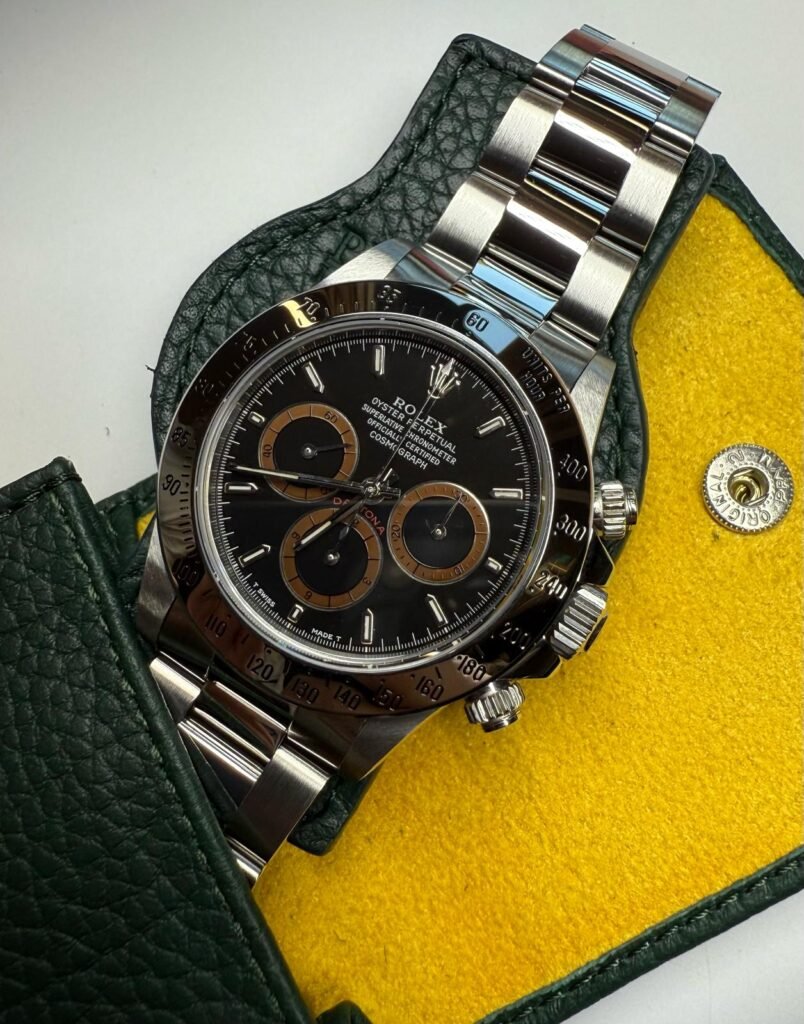
The bezel may feature numbers, scales, engravings and finishes closely associated with a particular model.
Here too, scratches and signs of use alone are not enough to determine which intervention is appropriate.
The assessment should consider:
geometry;
profile;
material;
surface condition;
legibility of markings;
previous interventions.
A worn bezel may be suitable for restoration, while in other cases a different approach may be more appropriate.
The decision depends on the individual component.
When Engravings Are Part of the Watch's History
The caseback, bezel, clasp and other components may retain inscriptions, numbers or logos that have lost definition over time.
Before considering replacement, it can be useful to determine whether the original marking can be recovered.
This can be particularly relevant when the component retains characteristics consistent with the model and its production period.
- Restoration may involve:
inscriptions;
numbers;
logos;
scales;
lettering;
lettering;
The shape and arrangement of the characters also need to be considered during the assessment.
The Vintage Rolex Bracelet
The bracelet can reveal an important part of a Rolex's history.
Long-term use can cause wear to the links, increased play between components and progressive stretching of the bracelet.
Different types of wear should not be treated as the same problem.
A bracelet may show:
worn links;
excessive play between connections;
deformation;
scratches;
scratches;
deteriorated engravings.
When the problem concerns the structure of the links, bracelet re-meshing or link restoration may be considered..
When the issue mainly affects the surfaces, aesthetic restoration may be more appropriate.
Originality and Replaced Components
One of the more delicate aspects of vintage Rolex assessment concerns components that may have been replaced over the years.
A watch may contain parts that differ from the configuration with which it originally left the factory.
This does not automatically mean that the current component should be removed.
Before carrying out any work, it is useful to establish:
which component is currently fitted;
whether it is appropriate to the production period;
whether its characteristics are consistent with the model;
whether there are signs of previous intervention;
what the owner wants to preserve.
Assessing originality should therefore come before any irreversible work.
Why choose Pendulum Laboratorio
What Can Vintage Rolex Restoration Involve?
There is no identical restoration process for every watch.
A Rolex may require a single intervention or a combination of specialist services.
For example:
Worn case
→ assessment of surfaces and geometry
Worn bezel
→ analysis of the component and its characteristics
Faded or worn engravings
→ assessment of whether the original marking can be restored
Loose bracelet
→ assessment of the links and possible re-meshing
Movement requiring service
→ servicing and mechanical watch service
The choice of intervention should therefore begin with the condition of the watch rather than with a predefined package of services.
When Is It Better Not to Intervene?
There are situations in which aesthetic work could alter a vintage Rolex more than intended.
This can occur, for example, when:
a case has already undergone several polishing processes;
the original geometry has been altered;
the dial has characteristics the owner wants to preserve;
a bezel retains a configuration consistent with its period;
an original component shows signs of use but does not have a functional problem.
In these situations, limiting the intervention (or deciding not to work on a particular component) may be the appropriate choice.
Conservation can be a technical decision, not an absence of restoration work.
What Information Should You Gather Before Restoring a Vintage Rolex?
An initial assessment can be more useful when some information about the watch is available.
Useful details include:
brand and model;
reference number;
serial number, where available;
production year, if known;
photographs of the case;
photograph of the dial;
photographs of the bezel;
photographs of the bracelet and clasp;
available documentation;
information about previous servicing or restoration work.
A close-up photograph of a specific detail can also help in assessing the condition of an individual component.
When necessary, the watch can then be examined directly.
Request an Assessment
If you own a vintage Rolex and are considering restoration work, the first step can be an assessment of its current condition.
Pendulum Laboratorio can examine the characteristics of the watch and identify which areas may require attention.
There is no need to decide in advance which services should be carried out.
It is more useful to start with the condition of the watch and with the owner's objectives regarding preservation or restoration.
Popular Questions
There is no single price.
The cost depends on the condition of the watch, the components involved and the work that may be required.
This depends on its condition and on how much material has already been removed.
An assessment of the case is necessary to determine what options remain.
Aesthetic restoration and mechanical servicing are separate areas of work.
If the movement requires maintenance, a specific service can be assessed.
Contact
info@pendulumlaboratorio.com
+39 3477670913
Partita IVA 02365780507
 English
  Italian