Watch Bracelet Stretch: Why It Happens and When It Becomes a Problem
Over time, a metal watch bracelet may develop increased play between its links, causing it to feel less rigid or appear longer than it once did.
This condition is commonly referred to as watch bracelet stretch, particularly in the context of vintage watches and older metal bracelets.
Despite the name, bracelet stretch does not necessarily mean that the metal itself has stretched. In many cases, the apparent elongation results from gradual wear at the connections between individual links.
Understanding where this wear occurs, how it affects the bracelet's structure, and when it requires professional assessment is particularly important when dealing with original vintage watch bracelets.
The guide
How Much Movement Is Normal in a Watch Bracelet?
A metal link bracelet is not a rigid structure.
Its links must move relative to one another to follow the natural movement of the wrist. A certain amount of flexibility and play is therefore normal, especially in bracelets made up of numerous individual links.
The situation changes when this movement increases noticeably over time.
Possible signs of excessive bracelet play include:
- Links that bend or move more freely than before.
- A bracelet that feels unusually flexible when lifted.
- Certain sections showing more play than others.
- Increased sagging or curvature along the bracelet.
- A noticeable change in how the watch fits on the wrist.
None of these signs, considered individually, is enough to determine whether a bracelet has a structural problem. What matters is how the bracelet behaves as a whole and whether its movement has changed compared with its previous condition.
What Causes Watch Bracelet Stretch?
Every time a watch is worn, the connections between its bracelet links are subjected to movement.
Over the years, repeated contact between the surfaces of these components can lead to gradual wear.
This process is usually progressive and may initially be difficult to notice.
However, as small amounts of play develop at multiple connection points, their combined effect can become increasingly visible.
A bracelet may therefore appear intact at first glance while showing considerable movement when handled.
This is the fundamental distinction behind the term bracelet stretch: the apparent increase in length often results from wear at the link connections rather than actual stretching of the metal itself. The extent and distribution of this wear depend on the bracelet's construction, its condition, and its history of use.
Key factors to consider
Why Does a Watch Bracelet Appear Longer Over Time?
An increase in apparent bracelet length is one of the most recognizable signs of progressive link wear.
As the connections between individual links develop additional play, the bracelet may extend further when fully straightened.
The effect can be particularly noticeable in bracelets that have been worn regularly for many years.
To observe this behavior, it is useful to examine the bracelet in several positions:
- Fully extended.
- Gently bent.
- Viewed from the side.
- Worn on the wrist.
These different perspectives can reveal how the links move in relation to one another and whether the bracelet's overall geometry has changed. If the bracelet appears significantly more extended or flexible than it did previously, a professional inspection may be appropriate.
Does Bracelet Stretch Affect Every Link Equally?
Not necessarily.
Wear does not always develop uniformly along a watch bracelet.
Some links may be subjected to greater movement or repeated mechanical contact, resulting in more pronounced wear at specific connection points.
Consequently:
- Certain links may remain relatively firm.
- Others may show noticeably greater movement.
- One section of the bracelet may appear more stretched than another.
- The degree of flexibility may vary along its length.
This is why assessing only one or two links can give an incomplete picture of the bracelet's condition.
The location and distribution of wear are often more informative than the amount of movement observed at a single point.
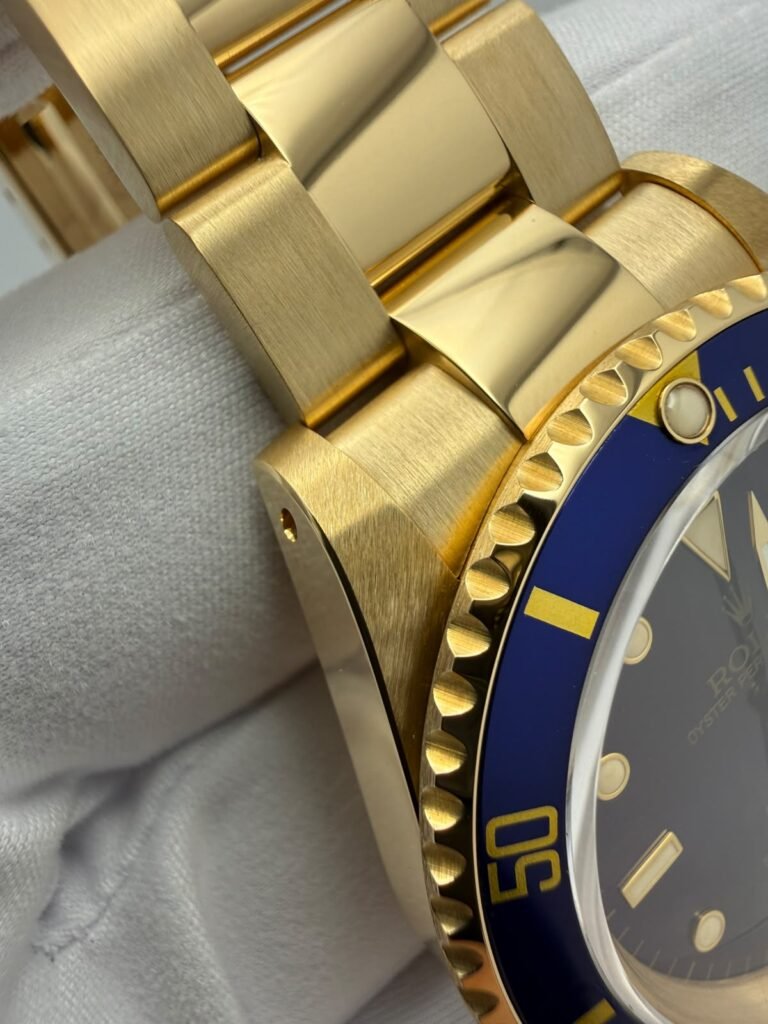
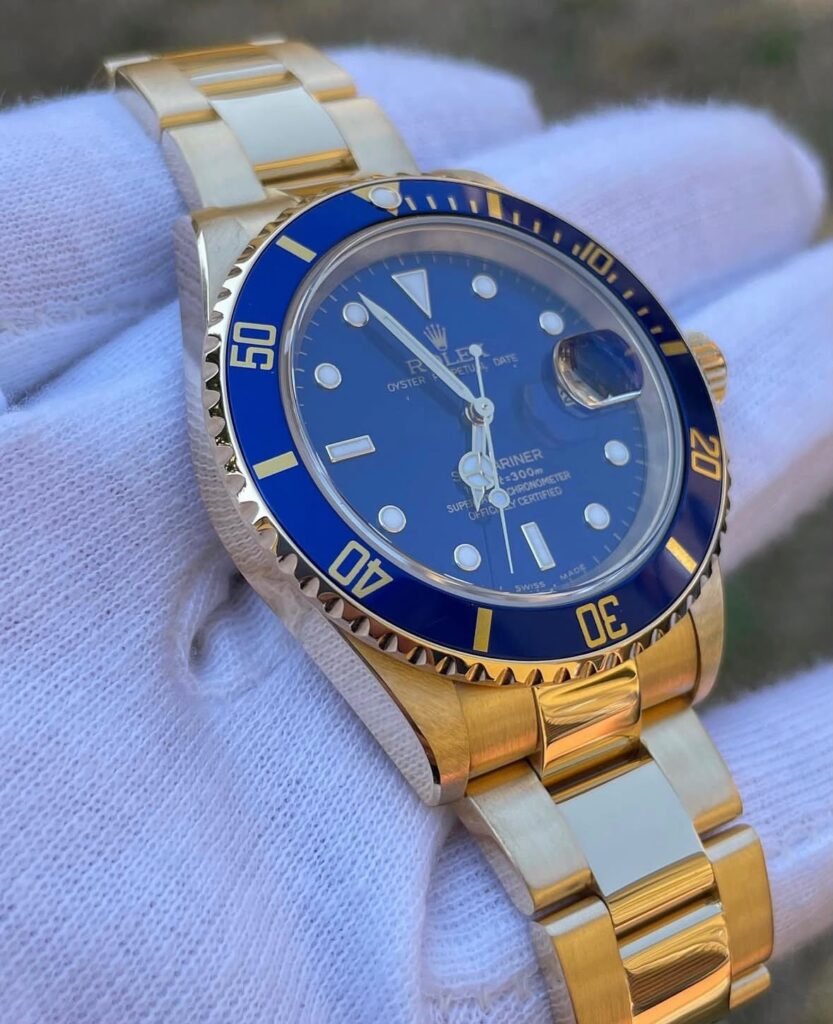
How to Distinguish Bracelet Stretch from Clasp Wear
A watch that feels loose on the wrist does not necessarily have excessive wear between its bracelet links.
Other components can also develop play over time, particularly the clasp and the points where the bracelet attaches to the watch case.
A preliminary assessment should distinguish between three areas.
Bracelet Links
When excessive movement is distributed along the bracelet, wear may be present at the connections between individual links. The amount of play may be relatively uniform or concentrated in particular sections.
Clasp and Fastening Mechanism
If unusual movement is mainly noticeable around the clasp, the issue may involve the fastening mechanism rather than the bracelet links themselves. The clasp should therefore be considered separately during an assessment.
Bracelet-to-Case Connection
The attachment points between the bracelet and the watch case can also develop unwanted movement. Unusual play in this area deserves attention, particularly when it affects how securely the bracelet remains connected to the case.
These different conditions can produce a similar sensation when thewatch is worn,even though their causes are not the same.
When Does Watch Bracelet Wear Become Noticeable?
There is no universal timeframe after which a metal watch bracelet will develop significant stretch.
It depends on how frequently the watch is worn, the bracelet's construction, and the conditions in which it has been stored.
A watch worn daily may experience a very different degree of mechanical wear compared to one that is only worn occasionally.
The way the watch is worn can also influence bracelet wear over time.
For this reason, monitoring changes in the bracelet's structural behaviour is more useful than establishing a standard lifespan.
If the amount of play between the links has noticeably increased, it may be worth having the bracelet professionally inspected.
Why Vintage Watch Bracelets Require Special Attention
Vintage watch braceletsmay have experienced decades of regular use.
They may also retain original finishes, components and construction features that belong to the watch's original configuration.
In these cases, wear does not simply reflect the bracelet's current condition. It may also provide valuable information about its history.
Before replacing an original component, it is therefore important to determine whether the problem is limited to wear within the link connections or whether other forms of damage are present.
A vintage watch bracelet showing signs of age does not necessarily need to be replaced.
What Happens When Watch Bracelet Stretch Becomes Excessive?
A heavily worn watch bracelet can become more difficult to wear and handle securely.
As the amount of movement between the links increases, the overall structure may become less stable.
When bracelet wear becomes advanced, it is advisable to arrange an inspection before individual components become further deformed or damaged.
Particular attention should be paid when:
- One link exhibits significantly more movement than the others.
- Visible deformation appears in the bracelet structure.
- A section of the bracelet opens or separates more than normal.
- The clasp no longer closes or remains secured correctly.
- There is excessive play at the connection between the bracelet and the watch case.
In these situations, a professional bracelet inspection can help identify the specific area responsible for the problem.
What If the Watch Bracelet Also Has Scratches?
Surface scratches and wear within the bracelet's link connections are two different issues.
A watch bracelet may show numerous fine scratches while retaining a structurally sound construction.
Conversely, a bracelet may appear to be in excellent cosmetic condition while exhibiting significant play between its links.
It is therefore important to distinguish between:
Cosmetic condition
and
Structural condition.
The presence of scratches does not necessarily indicate mechanical wear or damage to the bracelet's internal connections.
Similarly, a well-preserved external finish does not rule out wear affecting the link joints.
How to Visually Check a Watch Bracelet for Stretch
Some signs of bracelet wear can be observed without disassembling the bracelet.
Place the bracelet on a flat surface and examine:
- How much the bracelet bends or sags.
- How far the links separate from one another.
- Whether movement is consistent throughout the bracelet.
- Whether certain sections exhibit more play than others.
- Whether any visible deformation is present.
You can also carefully lift the bracelet by its clasp and observe how the links move and respond to gravity.
This simple visual inspection cannot determine the exact cause of the wear, but it may help you identify changes in the bracelet's behaviour over time.
What Photos Should You Take If Your Watch Bracelet Feels Loose?
If you would like to request an initial assessment of your watch bracelet, certain photographs can provide particularly useful information.
The Complete Watch
A photograph of the entire watch helps identify the model and assess the relationship between the watch case and bracelet.
The Bracelet Laid Flat
A photograph of the bracelet fully extended on a flat surface can help reveal its overall shape and any unusual separation between the links.
A Side View of the Bracelet
A side-angle photograph may make excessive link play and structural looseness easier to identify.
Close-Ups of the Most Worn Links
Detailed photographs can highlight areas showing greater movement, visible wear or deformation.
Clasp and Fastening Mechanism
Photographs of the clasp can help determine whether the unusual movement also affects the fastening mechanism.
The more clearly the photographs document the bracelet from different angles, the more information can be gathered before a hands-on examination.
When Should You Have Your Watch Bracelet Inspected?
You do not need to wait for a bracelet link to break before seeking professional advice.
A watch bracelet inspection may be appropriate whenever its behaviour changes noticeably or when wear has progressively increased.
In particular, consider having your bracelet assessed if:
- The bracelet appears noticeably longer than it used to.
- The amount of play between the links has increased.
- Certain links move significantly more than others.
- The clasp exhibits unusual movement or looseness.
- The connection between the bracelet and watch case no longer feels stable.
- Visible deformation has developed.
The primary purpose of an inspection is to identify where the wear is occurring.
Only after establishing the condition of the bracelet can an appropriate course of action be determined, if any intervention is necessary.
Does a Stretched Watch Bracelet Always Need to Be Replaced?
No.
Wear affecting the connections between bracelet links does not automatically mean that the entire bracelet is beyond restoration.
The possibility of restoring a worn watch bracelet depends on the condition of its individual components and the extent of the deterioration.
If the original structure retains suitable characteristics, a targeted restoration of the affected areas may be considered.
However, if the deterioration is extensive or involves components that cannot be recovered, alternative solutions may need to be evaluated.
Why the Bracelet Matters to the Value of a Luxury Watch
When assessing a luxury watch, the bracelet can represent an important part of its overall configuration and value.
This is particularly relevant for vintage watches, where the bracelet may be original to the timepiece or may have been replaced at some point during its history.
Before carrying out any work, it can therefore be useful to verify:
- Watch model.
- Reference number.
- Bracelet construction and specifications.
- Hallmarks, stamps and identifying markings.
- Condition of the individual links.
- Evidence of previous repairs or restoration work.
This information helps establish the bracelet's current condition and identify which original features may be worth preserving.
Why Bracelet Stretch Is Not Just About How Loose It Feels
Two watch bracelets may exhibit a similar degree of apparent looseness while having very different structural conditions.
In one bracelet, wear may be distributed relatively evenly across the links.
In another, the deterioration may be concentrated in a small number of specific areas.
The first may require an assessment of the entire bracelet structure, while the second may have a more localised issue.
For this reason, the perceived amount of bracelet stretch alone is not enough to determine what type of intervention may be required.
The more important question is:
where is the wear occurring, and how is it affecting the bracelet's structural behaviour?
When to Contact a Specialist Workshop Like Pendulum
If your watch bracelet shows increased play between the links, visible deformation or a noticeable change in its behaviour, a professional assessment can help identify the underlying cause.
The initial objective should not be to select a particular restoration procedure, but rather to understand the actual condition of the bracelet. capire lo stato del componente.
Following a thorough inspection, it becomes possible to determine whether the bracelet is showing normal signs of use, whether the wear requires further attention, or whether the issue could potentially be addressed through a specialised bracelet restoration procedure.
Popular Questions
With regular use, the connection points between bracelet links can gradually wear down. As this happens, the amount of play between the links increases, causing the bracelet to appear longer, looser or less compact.
Yes. A metal watch bracelet is designed to flex and follow the natural movement of the wrist. However, a noticeable increase in play between the links compared to their previous condition may indicate wear and should be assessed.
You can check how much the bracelet sags, how freely the individual links move, and whether certain sections exhibit more play than others. Any noticeable change in the bracelet's behaviour over time may indicate wear and should be professionally inspected.

Contact
info@pendulumlaboratorio.com
+39 3477670913
Partita IVA 02365780507
 English
 Italian