Rolex Daytona 116523 Bezel Restoration: A Pendulum Case Study
A tachymeter bezel can lose its legibility even when its original structure remains recognisable. Scratches, abrasions and wear can affect both the surface and the scale markings, altering the overall appearance of the component.
The photographs featured in this case study document the restoration work carried out by Pendulum Laboratorio on a stainless steel and gold Rolex Daytona 116523, with particular attention to its gold bezel and tachymeter scale.
The Starting Point
The Bezel Before Restoration
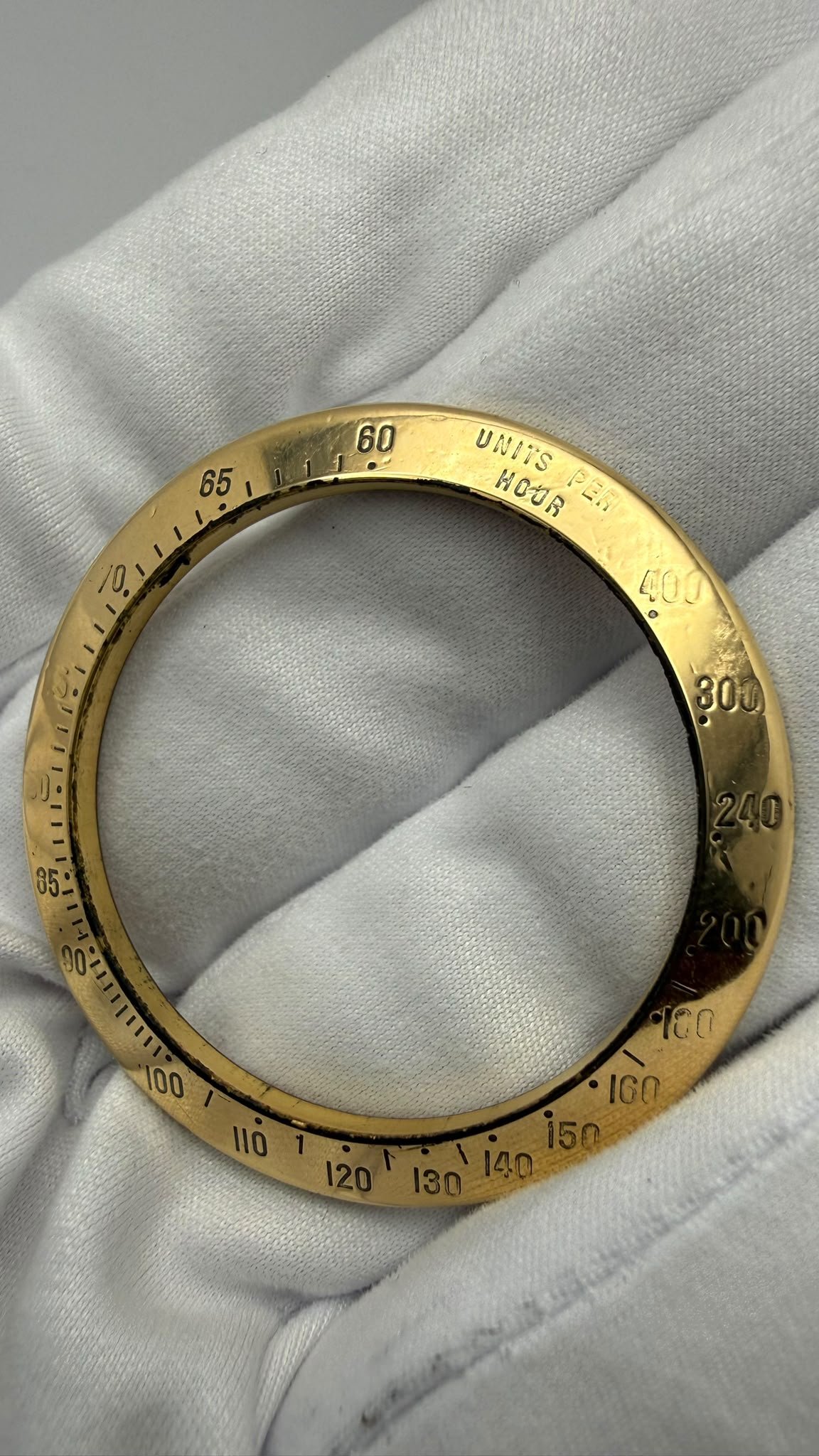
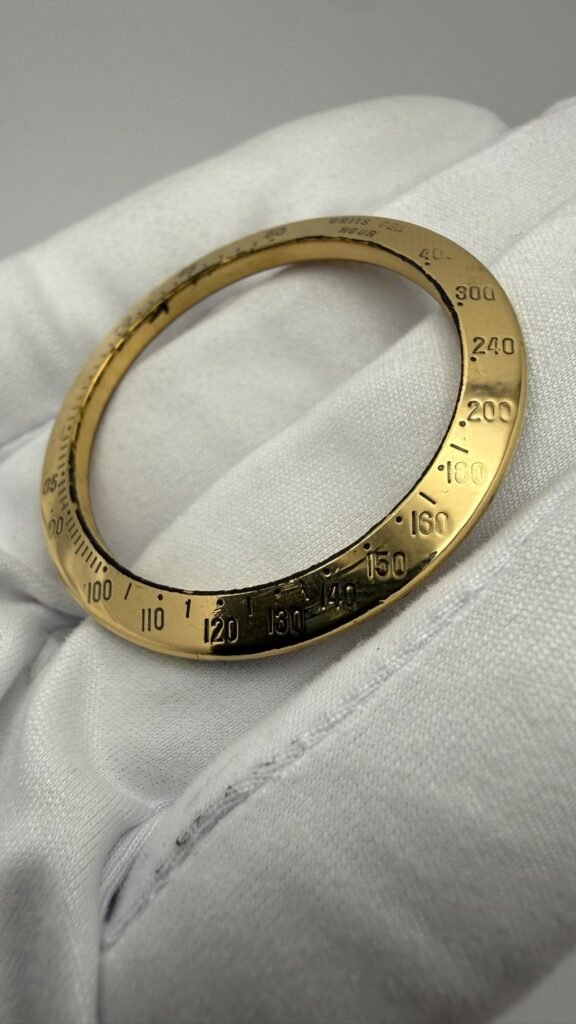
The initial photographs show several signs of wear across the bezel surface.
Abrasions, changes in the surface finish and areas where the tachymeter scale has become less consistently legible are clearly visible. Some numerals and markings appear less defined than in the post-restoration photographs.
Nevertheless, the component retains its overall configuration: the scale remains visible, the numerals are recognisable and the circular geometry of the bezel is still clearly identifiable.
This type of condition requires an assessment of the component as a whole. Its surface, numerals and finishes cannot be evaluated independently.
Pendulum's dedicated watch bezel restoration page describes this approach, which takes into account the material, geometry, surface finishes, engravings and any previous interventions.
A Rolex Daytona with a Gold Tachymeter Bezel
The component shown in the photographs belongs to a stainless steel and gold Rolex Daytona reference 116523, as identified in the accompanying documentation.
The bezel features the model's characteristic tachymeter scale, with numerals and markings positioned around the ring.
On a component of this kind, the legibility of the scale also depends on the condition of the surrounding surface. For this reason, restoring the markings cannot be considered separately from the overall finish of the bezel.
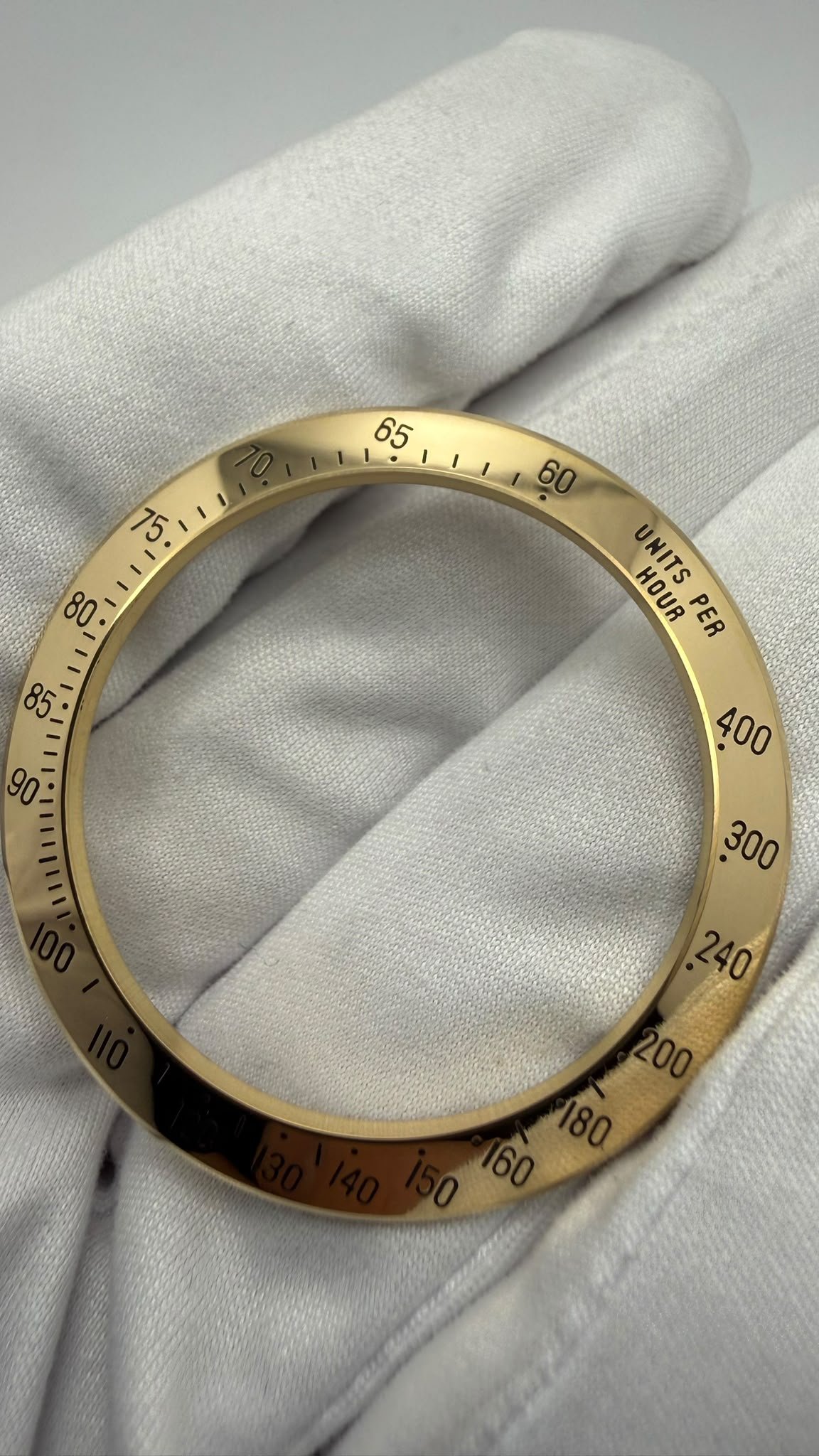
The photographs in this case study provide a direct visual comparison between the worn component and its appearance following restoration.
Key factors to consider
Before and After: Comparing the Results
The most noticeable changes concern the bezel surface and the legibility of the tachymeter scale.
In the initial photographs, certain areas show more pronounced signs of wear, while the markings vary in clarity and definition.
Following restoration, the surface appears more uniform and the tachymeter scale is more legible around the bezel.
The numerals and scale markers also show greater visual consistency compared with their initial condition.
The final photographs reveal an improvement in both the legibility of the scale and the uniformity of its markings.
This photographic comparison makes it possible to focus on the documented changes, from the condition of the original component before restoration to its appearance after the intervention.
Restoring the Tachymeter Scale Markings
The tachymeter scale is one of the most distinctive features of the Rolex Daytona bezel.
Before restoration, several markings appear worn or inconsistent in definition.
After the intervention, the numerals, dots and scale indicators are once again clearly legible.
When considering a bezel restoration, one of the key aspects to assess is whether the legibility of its distinctive markings can be restored while preserving the original characteristics of the component as far as possible.
Pendulum also addresses this type of intervention through its specialised service for restoring bezel numerals, scales and engravings,assessing the feasibility of restoration according to the condition of each individual component.
The Bezel Surface After Restoration
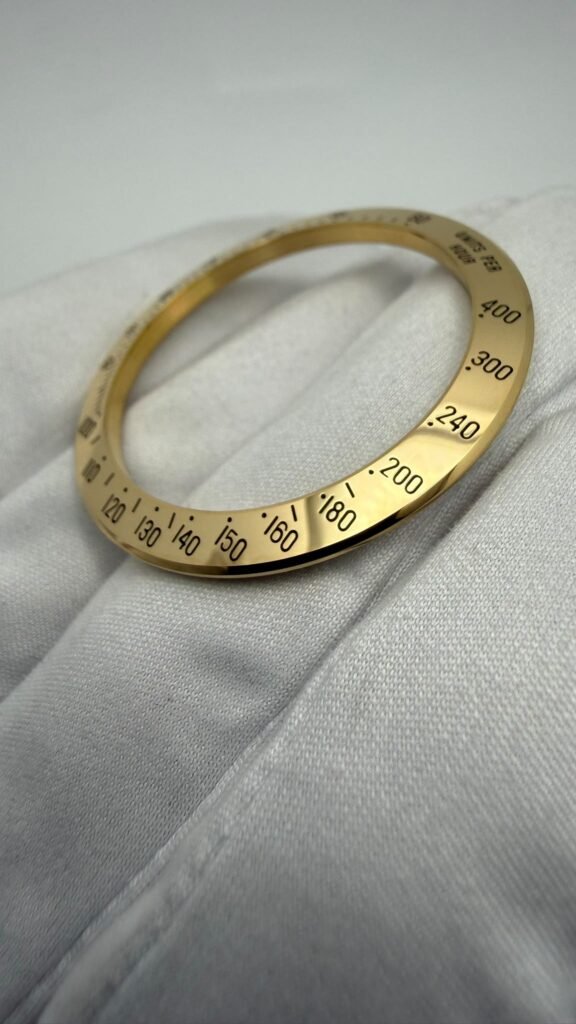
In the final photographs, the bezel surface appears more uniform than in its initial condition.
Images taken from different angles allow the component to be examined at multiple points, revealing greater consistency in the surface finish.
This comparison is particularly valuable because a single front-facing photograph would not provide the same level of visual information about the entire bezel.
Close-up photographs show both the engraved numerals and the areas between individual markings.
Viewing the component as a whole makes it possible to appreciate the extent of the documented changes.
Why Photographic Documentation Matters in Luxury Watch Restoration
When restoring a watch bezel, before-and-after photographs provide visual evidence of details that a general written description alone cannot convey as effectively.
In the case of the Rolex Daytona 116523, the photographs allow a direct comparison of:
The condition of the bezel surface;
The legibility of the numerals;
The definition of the tachymeter markings;
The distribution of visible wear;
The uniformity of the surface finish;
The overall appearance of the bezel following restoration.
Photographic documentation therefore plays an important role in watch restoration case studies, allowing readers to directly examine the component on which the work was carried out.
Restoring the Original Bezel Rather Than Replacing It
The photographs document the same bezel before and after the restoration process.
This case therefore illustrates the restoration of an existing original component rather than the installation of a replacement part.
This distinction is particularly relevant when dealing with watch components featuring model-specific numerals, engravings and scale markings.
Restoring an original bezel can be considered before opting for replacement, provided that the condition of the component allows for such an intervention. However, the feasibility of restoration always depends on the actual condition of the bezel, the remaining material and the original characteristics that need to be preserved.
Rolex Daytona 116523 Bezel Restoration: The Final Result
The final photographs show a bezel with a more uniform surface finish and a clearly legible tachymeter scale.
The numerals, dots and scale indicators appear more consistent than in the documented pre-restoration condition.
The value of this photographic comparison lies in the opportunity to observe the component directly. The documented result concerns not only the surface finish but also the overall appearance of the bezel and the legibility of its distinctive markings.
This Rolex Daytona 116523 restoration case demonstrates how a worn original component can be assessed for restoration without automatically resorting to replacement. Each component must, however, be evaluated individually to determine whether restoration is technically appropriate.
Does Your Rolex Bezel Show Signs of Wear?
A scratched bezel or a tachymeter scale with faded or poorly legible markings does not, in itself, determine which type of restoration is required.
A professional assessment must consider the condition of the component, its original characteristics and any previous interventions.
If you own a Rolex Daytona or another luxury watch with a damaged or worn bezel, you can send photographs of your watch and the affected component to Pendulum Laboratorio, together with the brand, model and reference number, where available.
Photographs can provide an initial indication of the bezel's condition and help determine whether a more detailed examination is appropriate. For an initial assessment, Pendulum recommends providing both overall photographs of the watch and detailed close-up images of the affected component.
Popular Questions
It depends on the condition of the component. Scratches, abrasions, worn markings and changes in the surface finish must be assessed on each individual bezel before determining whether restoration is feasible.
When the condition of the component allows, restoring the legibility of numerals, dots and other scale markings may be considered. In the case of the Rolex Daytona 116523 documented in this article, the photographs show improved legibility and greater consistency of the markings following restoration.
Before-and-after photographs allow several aspects of the component to be compared, including the condition of the surface, the legibility of the numerals, the definition of the markings and the uniformity of the finish. However, a definitive assessment of the restoration requires a direct examination of the component.

Contact
info@pendulumlaboratorio.com
+39 3477670913
Partita IVA 02365780507
 English
 Italian