Aesthetic Restoration
of Luxury Watches
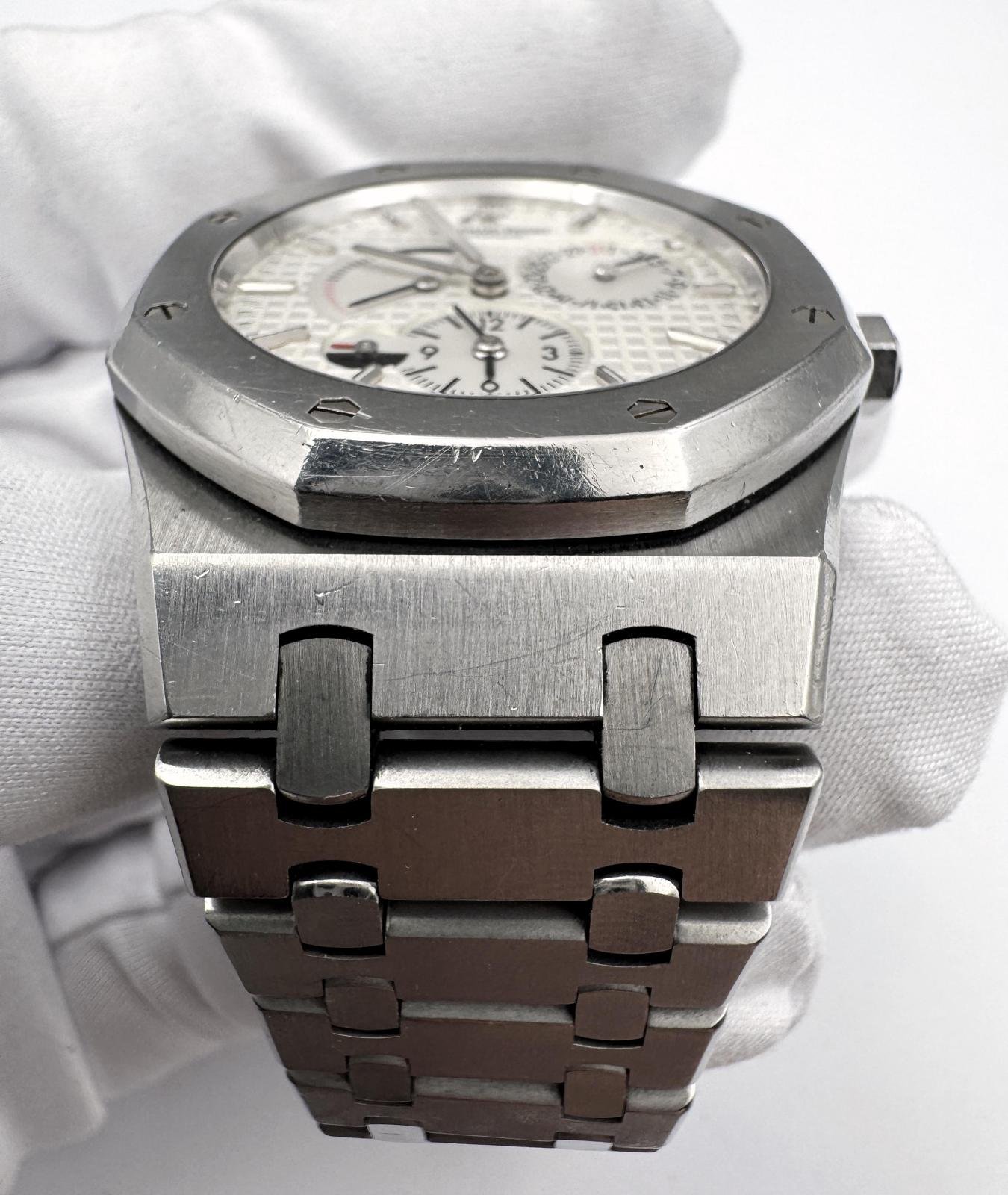
Scratches, dents, altered finishes, and softened edges can progressively alter the appearance and proportions of a watch.
In these cases, aesthetic restoration should not be seen as a simple surface polish. Pendulum Laboratorio evaluates each watch individually, considering the case, bracelet, surfaces, and visible damage before defining the most appropriate course of action.
The goal is not to erase every mark at any cost, but to determine what can be recovered,, what must be preserved, and to what extent intervention is advisable.
Restoring a Watch's Appearance While Respecting Its Shape and Proportions
A timepiece's case is not merely a metal surface.
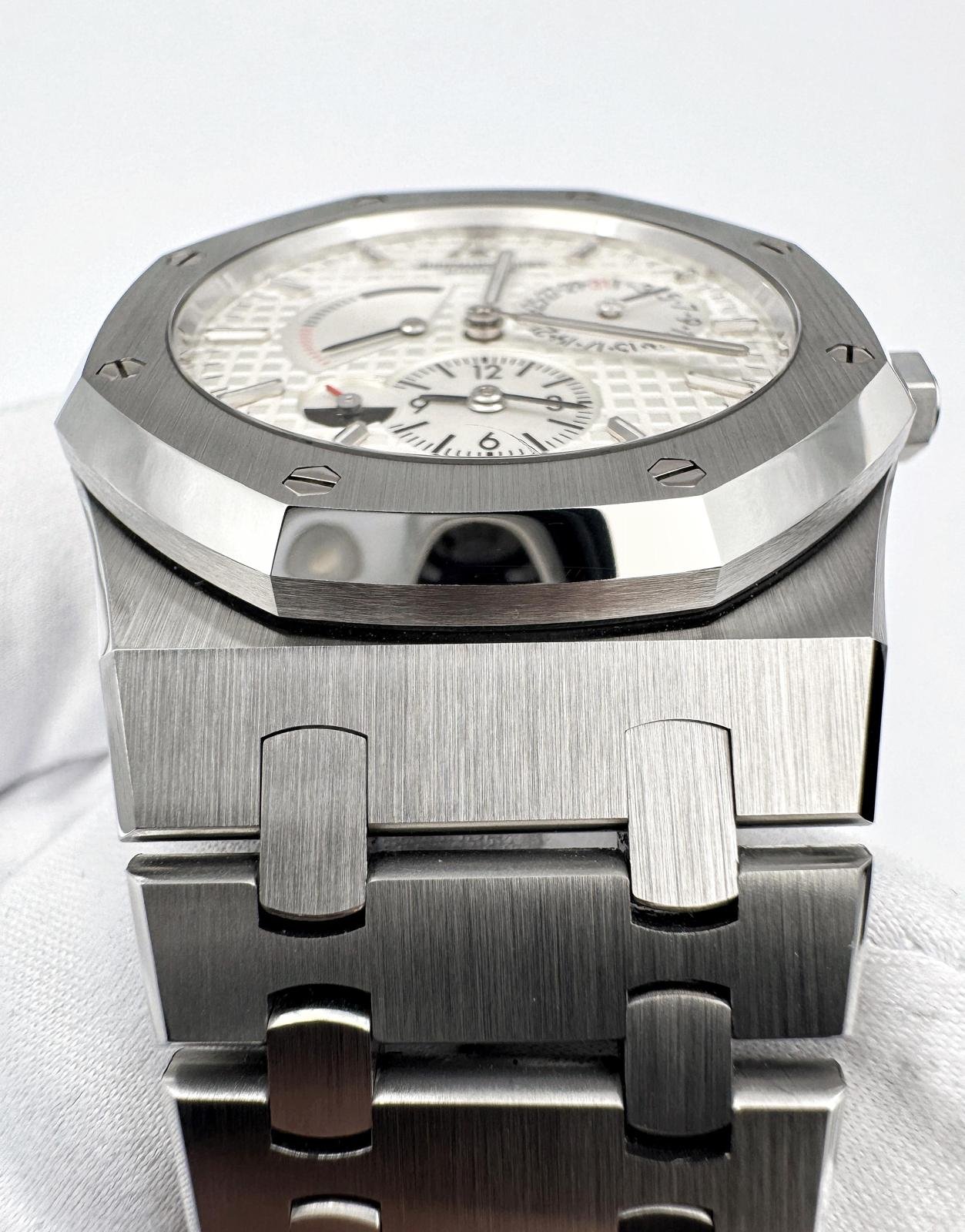
Edges, lugs, chamfers, profiles, polished areas, brushed sections, and transitions between different finishes all contribute to the model's aesthetic identity.
For this reason, before any work begins, the component must be assessed as a cohesive whole.
- initial evaluation takes into account:
- General condition of the case and bracelet
- Depth and location of scratches or impacts
- Remaining original geometry
- State of polished and brushed surfaces
- Any previous refinishing or work
- Worn engravings or details
- Model-specific characteristics
- The owner's objectives
Two watches presenting seemingly similar damage may therefore require very different approaches.
When to Consider Aesthetic Restoration
Deep Scratches and Case Marks
Normal signs of wear differ significantly from deep scratches, gouges, or abrasions that clearly affect a surface or edge.
In these instances, it is essential to understand how much metal is involved and whether simple surface work will truly suffice.
Attempting to eliminate a deep flaw through polishing alone can, in certain situations, remove more material than is desirable.
Dents and Localized Deformations
An impact can locally distort a surface, an edge, a lug, or part of the case profile.
When the issue cannot be resolved with a standard finish, more specific techniques must be assessed to determine what result is realistically achievable.
Softened Edges and Altered Geometries
Repeated polishing, impacts, or prior interventions can progressively reduce the definition of edges, profiles, and bevels.
In these situations, the issue concerns both the surface and the component's geometry.
Before proceeding, it is necessary to assess which original features remain and which can potentially be restored.
Deteriorated Polished and Brushed Finishes
Many watches alternate between different surface finishes.
A polished zone might sit adjacent to a brushed surface; a chamfer might carry a different texture from the primary plane; the grain direction of a brushed finish may be integral to the design.
Proper refinishing must consider:
- Direction of the grain
- Surface texture
- Crisp separation between contrasting zones
- proportions;
- Visual continuity
The aim is to make the metal gleam while fully respecting the design language of the component.
Faded Engravings and Details
Case backs, clasps, bezels, and other elements often feature engravings that become softened over time or through previous polishing.
Any potential restoration must be evaluated carefully, taking into account the state of the remaining markings, the surrounding surface, and the technical feasibility of the work.
The Pendulum Laboratorio Method
Every watch carries its own history.
For this reason, our process is built on the close observation and evaluation of the individual piece, avoiding standardized treatments.
1. Initial Analysis
The first stage involves examining the watch's overall condition,
observing:
- Visible damage
- Altered surfaces
- Signs of previous work
- Definition of edges and profiles
- Polished and brushed areas
- Localized deformations
- Elements that should be preserved
Clear, detailed photographs are helpful for an initial remote appraisal,
though direct examination of the timepiece may be required for a definitive assessment.
2. Study of Case and Geometry
Before working on the surface, understanding its architecture is critical.
Edges, lugs, profiles, transitions, and proportions are analyzed to identify remaining original characteristics and areas requiring specialized attention.
This stage is particularly vital for models defined by sharp angles or precise alternating finishes.
3. Defining the Intervention
Not every defect calls for the same technique.
Depending on the component’s condition, the solution may involve refinishing the surface, treating a localized area, reshaping the geometry, or applying a combination of methods.
The treatment is tailored strictly to the actual condition of the watch, avoiding generic, indiscriminately applied procedures.
4. Localized Material Recovery
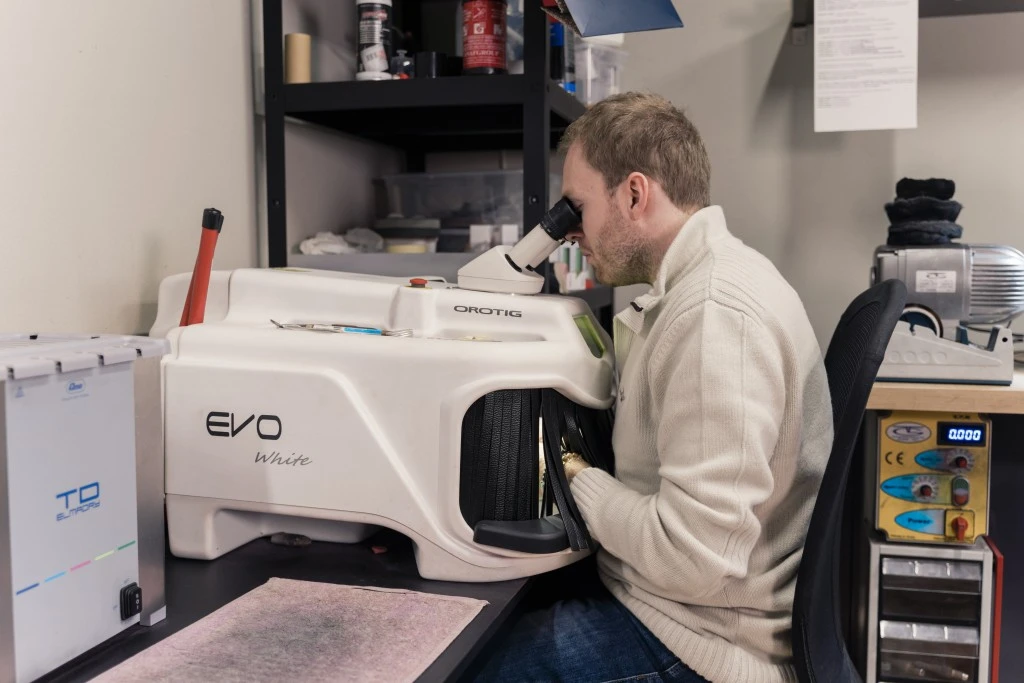
When damage cannot be properly addressed via surface work alone, localized material addition may be considered.
This includes laser welding, applied in specific scenarios where microscopic, precise interventions are required.
Its use is never automatic;
it depends on the alloy, the location of the damage, the integrity of the component, and the technically achievable outcome.
5. Restoring Profiles and Geometries
Where necessary, attention shifts from surface finishing to restoring the form of the component.
The objective is to recover crisp definition wherever technically viable while avoiding unnecessary material loss.
Depending on the case, this may focus on:
- edges;
- lugs;
- profiles;
- Bevels
- Transitions and interfaces between surfaces
- Signature geometric elements of the reference
6. Polishing and Brushing
Once any structural corrections are complete, surfaces are finished according to the component’s original specifications.
Polishing and brushing become part of a broader, controlled restoration rather than the sole objective,
with strict attention paid to the contrast and visual cohesion of the whole piece.
7. Final Inspection
Once the work is completed, the component undergoes a thorough quality check
focusing on surface definition, finish consistency, profile sharpness, and the overall aesthetic balance.
Aesthetic Restoration vs. Polishing: What Is the Difference?
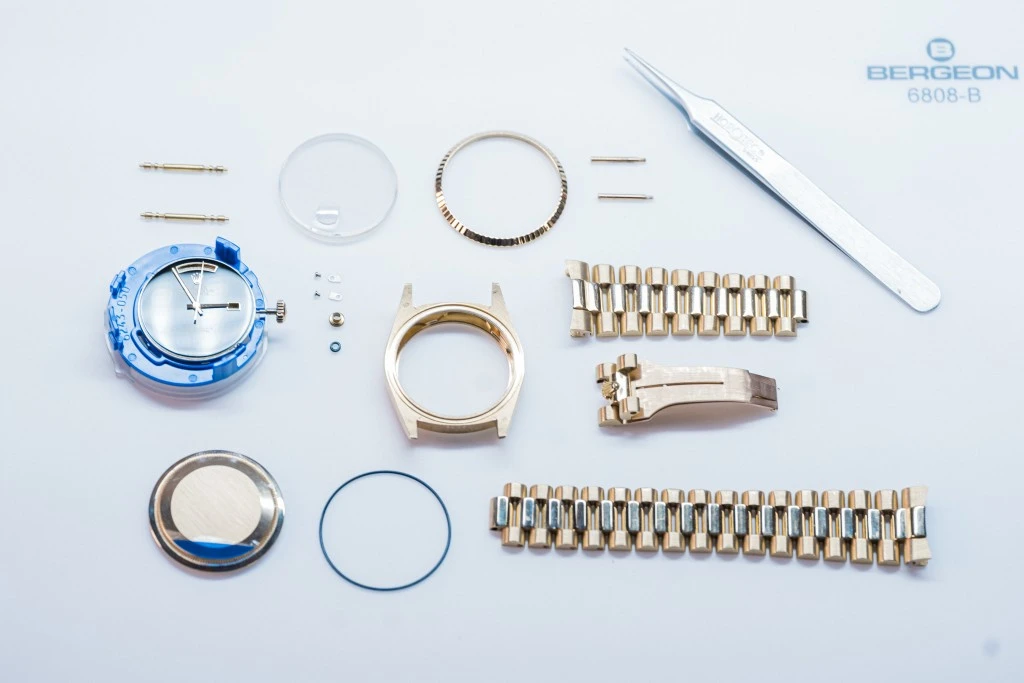
These terms are often used interchangeably, but they refer to distinctly different levels of intervention.
- Polishing primarily focuses on refining and smoothing the outer surface finish.
Restoring a Aesthetic Restorationinvolves a comprehensive evaluation of the watch’s structural condition and can include interventions aimed at rebuilding lost geometries, sharp bevels, or impact-damaged zones.
Polishing may be a phase within a restoration, but it rarely represents the entire process.
This distinction is critical when:
- Deep scratches or gouges are present
- Surfaces have been deformed by impact
- Original case geometry has been softened or rounded off
- The component has already undergone multiple rounds of polishing
- The watch features complex alternating finishes
- The priority is to preserve original factory contours
A Conservative Approach: Less Is Often More
A vintage watch does not necessarily need to look factory-new.
Especially on collector-grade and historical pieces, honest patina and signs of wear contribute to the timepiece’s provenance and character.
Because of this, the most aggressive intervention is not always the most appropriate.
Depending on the condition, it may be preferable to:
- Treat only an isolated damaged area
- Preserve an intact original surface
- Retain honest signs of age
- Avoid disturbing fragile details or hallmarks
- Limit work strictly to what is necessary
- Choose not to alter a specific component cosmetically
The decision must balance condition, technical feasibility, and the collector's intent.
True craftsmanship lies in knowing what can be done versus what should be done..
Modern vs. Vintage Watches Require Distinct Approaches
Identical damage does not warrant the same intervention across different timepieces.
On a modern reference, returning a damaged surface or factory finish to a pristine state is often the priority.
On a vintage piece, preserving originality and sharp, unpolished metal takes precedence.
A case that has never been touched will present entirely different considerations
than one repeatedly polished over decades.
Age, preservation state, and history must guide the path forward.
Why Photographs Are Essential for an Initial Evaluation
Accurate photographic documentation helps assess initial conditions and pinpoint areas requiring attention.
For a preliminary analysis, the following shots are most useful:
- Full front view of the watch
- Direct shot of the case back
- Both case profiles (crown side and flank)
- Close-ups of the lugs and chamfers
- Clasp
- Bracelet
- Macro shots of any deep scratches or dents
- Details of worn or faded finishes
- Any faded or softened engravings
While photographs cannot fully replace an in-person physical inspection, they provide the essential technical baseline for an initial assessment.
Popular Questions
It depends on the depth, location, alloy, and overall condition of the component.
A superficial hairline mark and a deep gouge require fundamentally different solutions.
The objective is never to erase a mark at any cost, but to apply the safest, most appropriate method for that specific area.
In many cases, yes.
The result depends on the remaining geometric lines, the available metal, and any prior polishing work.
A direct physical examination is required to determine what level of sharpness can realistically be recovered.
No.
Polishing is only one of many techniques and is not automatically the right choice for every situation.
In some instances it is appropriate; in others, preserving the original surface or using a localized approach is preferred.
No.
Laser welding is an advanced technique evaluated on a case-by-case basis. Its suitability depends on the specific metal, the location and nature of the defect, and the structural integrity of the component.
It is a precise tool in our workshop, not a one-size-fits-all solution.
Contact
info@pendulumlaboratorio.com
+39 3477670913
Partita IVA 02365780507
 English
  Italian